Best Screen-Free Cameras of 2026: Digital, Film and Instant
Updated 2026-11-10 · By the Touch Grass editors
The best screen-free camera for most people is the Camp Snap 2 (about $70), a digital camera with no screen, six filters and about 500 shots per charge. For film, the Kodak Ektar H35N (about $65) gets about 72 photos from a 36-exposure roll. For prints on the spot, the Instax Mini 13 (about $94) is the easiest instant camera to use.
A screen-free camera makes you wait to see your photos. You take the shot, put the camera away and get back to whatever you were doing. No reviewing, no retaking, no picking the best of 14 near-identical frames.
We sorted the 2026 options into three kinds: screenless digital cameras, film cameras and instant cameras. Two popular picks have small screens or hidden-screen modes, and we say so plainly where that applies.
| Camera | Price | Type | Screen | Best for |
|---|---|---|---|---|
| Camp Snap 2 | About $70 | Digital | None | Most people, kids |
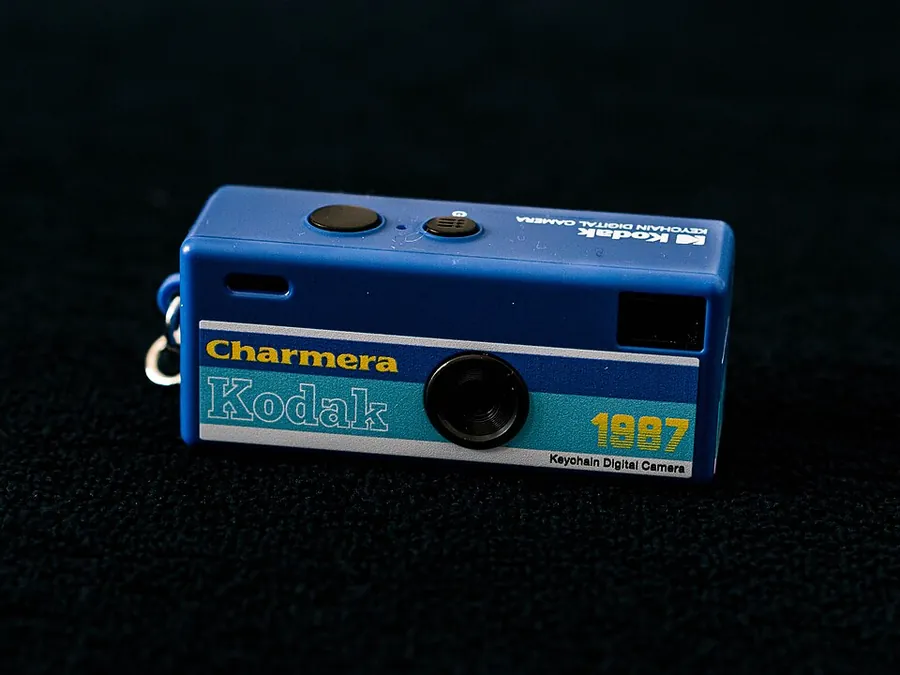
| Kodak Charmera | About $35 | Digital keychain | Tiny 0.8-inch live-preview screen | Lo-fi fun, gifts |
| Kodak Ektar H35N | About $65 plus film and developing | 35mm half-frame film | None | Trying film cheaply |
| Fujifilm X half | About $450 on sale (list $649.95) | Digital | Rear screen; Film Camera Mode hides shots until the roll ends | Hobbyists who want quality |
| Instax Mini 13 | About $94 plus film | Instant | None | Prints at parties |
| Polaroid Go Gen 3 | About $90 plus Go film | Instant | None | Smallest Polaroid prints |
What counts as a screen-free camera?
A screen-free camera is any camera that doesn't let you look at a photo right after you take it. That includes digital cameras with no display, film cameras, and instant cameras that hand you a print instead of a preview.
The point is the delay. You can't check, delete or retake, so you take fewer photos and pay more attention to the moment itself. Each type handles the delay differently:
- Screenless digital: photos go to a memory card and you see them later on a computer. Cheapest per shot.
- Film: you finish a roll and send it to a lab. You get negatives and digital scans back. See how to get film developed.
- Instant: a print comes out and develops in your hand. The most fun at a party, and the most expensive per photo.
Best overall: Camp Snap 2
The Camp Snap 2 is the best screen-free camera for most people because it's a true no-screen digital camera that costs about $70 and has almost no running costs.
There's no screen, no app and no Wi-Fi. It ships charged with the memory card already installed, so you can take it out of the box and start shooting. A charge lasts about 500 photos, and it recharges over USB-C. This version is slimmer than the original and adds six built-in filters, including Vintage, Analog and B&W. CampLock lets a parent lock the filter button and the card door, which makes it a good pick for kids too.
You see your photos when you get home and copy them off the card. That's the whole experience, and it's the reason people love it.
Not for: anyone who needs to confirm focus or framing, or who wants a camera this week. It was sold out on Camp Snap's own site when we checked, so check stock before you plan a gift around it.
Best cheap lo-fi digicam: Kodak Charmera
The Kodak Charmera is the best pick under $40 if you want the grainy, date-stamped 2004 look on a camera that clips to your keys.
It's a 1.6MP digital camera (1440×1080 stills, plus 30fps video) with a date stamp, Kodak-style frames and seven filters. It charges over USB-C and saves to a microSD card. It comes in a blind box, so the color is a surprise. YPulse reported that the September 2025 drop and a restock each sold out within 24 hours, mostly on the strength of TikTok posts.
One honest caveat for a screen-free list: the Charmera has a tiny 0.8-inch live-preview screen next to its optical viewfinder. It's small enough that nobody scrolls through photos on it, but it is a screen. The single box also doesn't include a microSD card, so budget a few dollars for one (Kodak's RETO shop sells a bundle with a 64GB card for about $40).
Not for: anyone who wants sharp photos, or households that want zero screens.
Best film camera for beginners: Kodak Ektar H35N
The Kodak Ektar H35N is the easiest, cheapest way to try real film, at about $65 for a reusable camera that doubles every roll.
It shoots half-frame, so a 36-exposure roll gives you about 72 photos. It has a glass lens element, a built-in flash that runs on one AAA battery, a star filter that turns night lights into starbursts, and a bulb mode with a tripod mount for long exposures.
Load it with Kodak Gold 200 (about $11 a roll). That works out to about 15 cents a frame for the film alone ($10.99 ÷ 72), plus developing and scanning, which varies by lab. Gold develops with the standard C-41 process almost any lab can run.
Not for: people who want photos the same day, or who don't want to deal with a lab. Tell your lab the roll is half-frame so they scan it correctly.
Kodak Ektar H35N Half-Frame
A reusable film camera that doubles every roll $64.99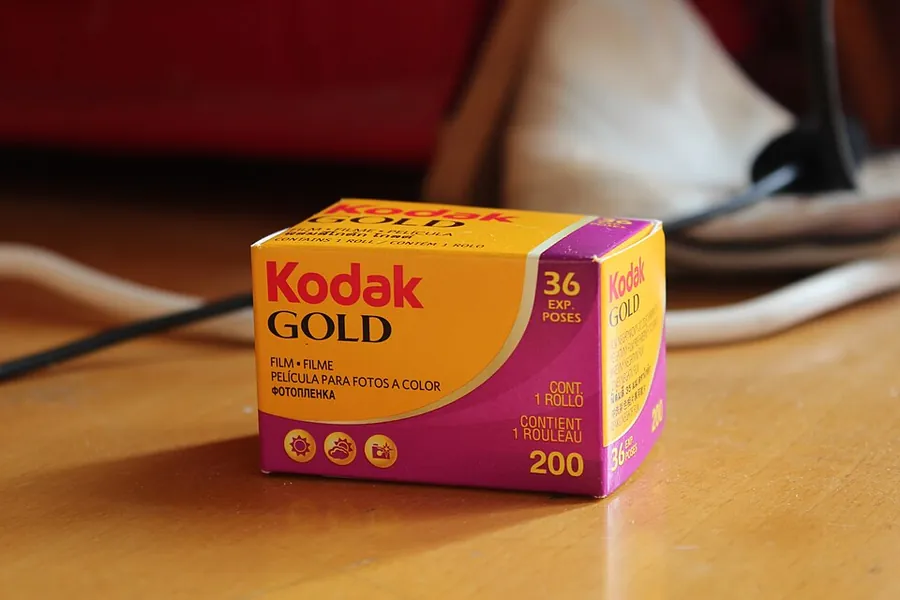
Kodak Gold 200 (35mm, 36 exp)
Warm, forgiving color film $10.99Best for serious photos with a roll-of-film feel: Fujifilm X half
The Fujifilm X half is the pick if you want much better image quality and are fine with a camera that has a screen you can choose to ignore.
To be clear: the X half has a rear screen. What earns it a spot here is Film Camera Mode, which locks you into a 36-, 54- or 72-shot "roll," uses a frame-advance lever between shots, and hides each photo until the roll is done. Outside that mode it behaves like a normal digital camera with playback.
It has an 18MP 1-inch vertical sensor, a 32mm-equivalent f/2.8 lens, an optical viewfinder and 13 Film Simulations, and weighs about 240g. Fujifilm US had it on sale for about $450 when we checked (list price $649.95). Digital Camera World called it "becoming a cult classic."
Not for: anyone shopping for a kid, anyone who knows they'll switch out of Film Camera Mode the first time they're curious, or anyone on a tight budget.
Best instant camera: Instax Mini 13
The Instax Mini 13 is the best screen-free camera for instant prints because it's fully automatic and its film is the cheapest instant film per photo.
It sets exposure and flash for you, has a selfie mirror, a 2- or 10-second self-timer, and a close-up mode you reach by turning the lens ring. It runs on two AA batteries. Prints are credit-card size and develop in about 90 seconds.
A twin pack of Instax Mini film gives you 20 photos for about $18, which is about 90 cents a print ($17.99 ÷ 20). Retail prices for the twin pack range from about $17 to $25, so check the retailer for today's price.
Not for: people who want big square prints or a lot of manual control.
Instax Mini 13
The easiest instant camera, now better at selfies $93.95Instax Mini Film Twin Pack
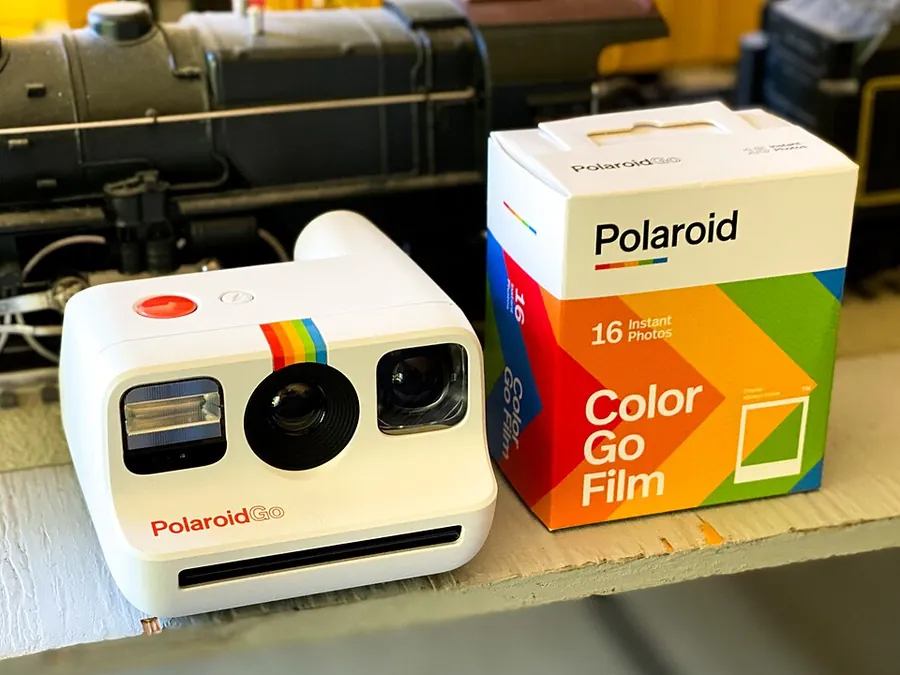
Twenty prints for any Instax Mini $17.9920 photosBest pocket Polaroid: Polaroid Go Gen 3
The Polaroid Go Gen 3 is the pick if you want real Polaroid prints from a camera small enough for a jacket pocket.
PetaPixel covered its June 2026 launch as the world's smallest instant analog camera. This generation adds a new lens, a stronger flash and five new colors. It keeps the selfie mirror, self-timer and double exposure, and prints mini square photos.
It uses Polaroid Go film, which is a smaller format than the i-Type and 600 film used by the Polaroid Now and Flip. Price a few packs before you buy so the running cost isn't a surprise.
Not for: anyone who wants full-size Polaroid prints. Get the Polaroid Now Gen 3 instead, or see our best instant cameras guide.
How do you choose between digital, film and instant?
Pick by how you want to see your photos and how much you want each one to cost.
- Lowest cost per photo: a screenless digital camera like the Camp Snap 2. After you buy it, photos are basically free.
- The real film look: the Kodak Ektar H35N with Kodak Gold. Expect to pay for film and lab work on every roll.
- A print to hand someone: an instant camera. The Instax Mini 13 costs about 90 cents a print; classic square Polaroid i-Type film costs about $2.37 a print ($18.99 ÷ 8). Our Polaroid vs Instax guide has the full math.
- For a kid: Camp Snap 2 with CampLock, or see the best cameras for kids.
Browse everything in our Cameras & Film department.
Frequently asked questions
Does the Camp Snap 2 have a screen?
No. The Camp Snap 2 has no screen, no app and no Wi-Fi. You see your photos later by copying them off its memory card.
Does the Kodak Charmera have a screen?
Yes, a very small one. It has a 0.8-inch live-preview screen and an optical viewfinder, so it is screen-light rather than fully screen-free.
Can you turn off the screen on the Fujifilm X half?
The X half has a rear screen, but its Film Camera Mode hides each photo until you finish a 36-, 54- or 72-shot roll. That gives you the film-style wait as long as you stay in that mode.
What is the cheapest screen-free camera to run?
A screenless digital camera like the Camp Snap 2. You pay once for the camera, and each photo after that costs nothing. Film and instant cameras cost money for every shot.
How many photos do you get from a half-frame camera?
About twice the roll count. A 36-exposure roll in the Kodak Ektar H35N gives you about 72 photos.
Is a screen-free camera good for kids?
Often, yes. The Camp Snap 2 has a parent lock called CampLock for the filter button and card door, and the Instax Mini 13 is fully automatic. Our kids camera guide covers both.
Sources
- Good Morning America: Camp Snap 2, the viral screen-free camera, returns
- Camp Snap 2 product page
- YPulse: Kodak's sold-out trinket camera on the Viral List
- Wikipedia: Kodak Charmera (specs, screen and viewfinder)
- Kodak (RETO): Charmera blind box and microSD bundle
- Digital Camera World: Kodak Ektar H35N learns new tricks
- Digital Camera World: The Fujifilm X half is becoming a cult classic
- Digital Camera World: Instax Mini 13 review
- PetaPixel: Polaroid Go Generation 3 is the world’s smallest instant analog camera
We may earn a commission when you buy through links on this page, at no extra cost to you. It never decides what we list. More
Keep reading
Best Instant Cameras of 2026: Polaroid and Instax, Compared
The best instant cameras of 2026: Instax Mini 13, Polaroid Now Gen 3, Go Gen 3 and Flip, with film cost per print and who each camera is right for.
ComparisonCamp Snap 2 vs Kodak Charmera: Which Viral Camera to Buy?
Camp Snap 2 vs Kodak Charmera: the Camp Snap has no screen and a kid lock for about $70, the Charmera is a $35 keychain digicam. Here is which to buy.
How-toHow to Get Film Developed in 2026 (Labs, Scans, Half-Frame)
How to get 35mm film developed: what C-41 means, local vs mail-in labs, what scans are, and how to make sure your half-frame roll gets scanned right.